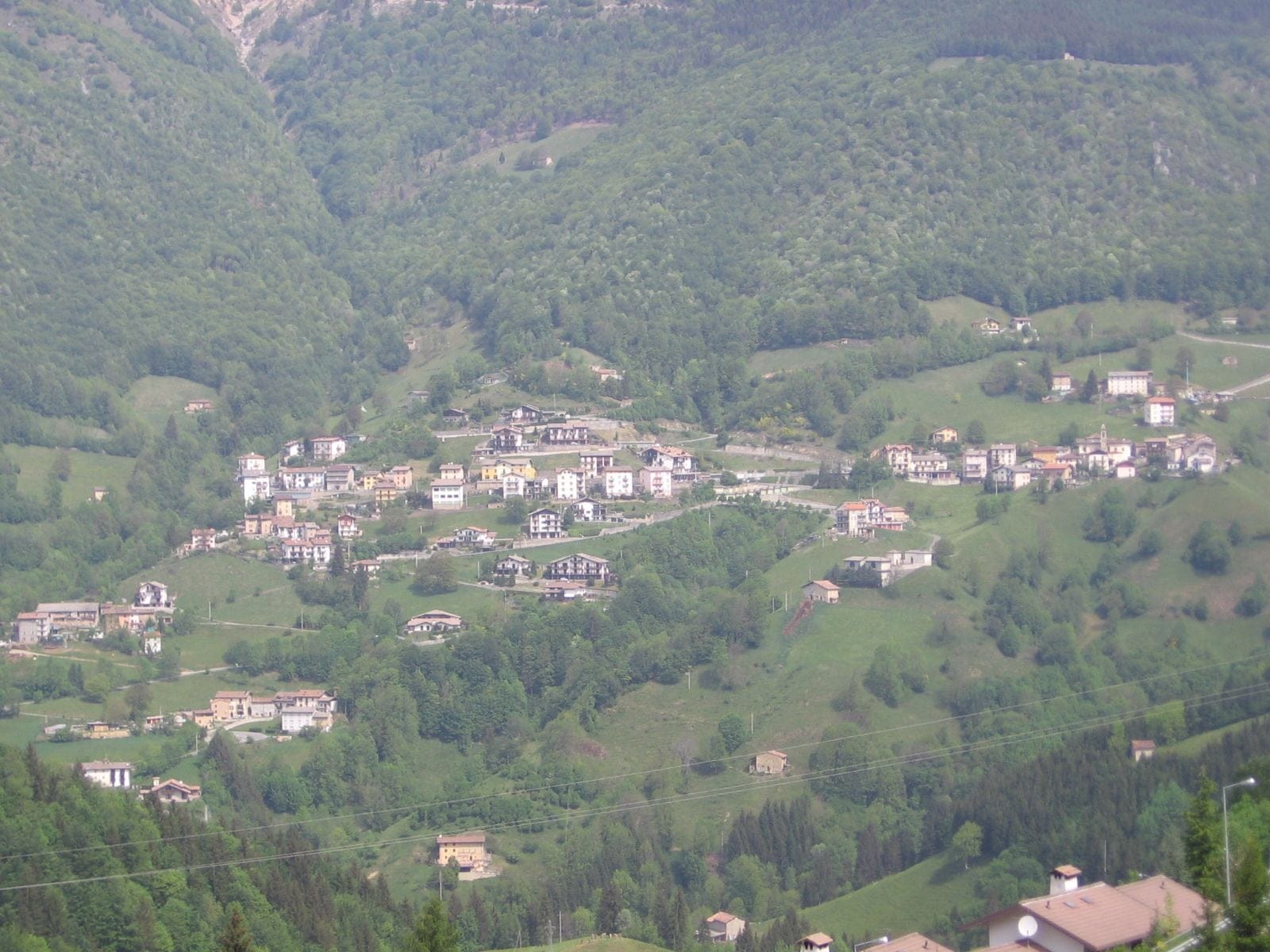
Museum · Zorzone · Oltre il Colle
Museum of Minerals and Mining in Zorzone
Three floors on the zinc and lead mines of Oltre il Colle in Zorzone's old school: miners' tools, a rebuilt tunnel, local minerals and a 1944 memorial.
Notice
The opening hours and ticket prices published by the municipality, the Comunità Montana and the Ministry of Culture do not match, and none of them is recent: phone 0345 95313 before you go.
The Museum of Minerals and Mining is where the mining history of Oltre il Colle can be seen at close range. It is in Zorzone, in the former primary school on via Funivia: a square mid-twentieth-century building in stone and concrete, publicly owned, built as a school and now used entirely as a museum. Inside are the machines and tools of the tunnels under the Arera, the Grem and the Menna, a collection of minerals and fossils and, on the top floor, the memorial to an American bomber that crashed on the Menna in 1944.
It is a village museum, born from the passion of people who had worked in the mines. The Ministry of Culture names as its curator Franco Palazzi, who had been a surveyor in the mines and spent years collecting minerals, fossils and testimonies, helped by many former miners of the area; in 2019 Marco Palazzi told Prima Bergamo he had been running the museum for almost twenty years. The municipal leaflet makes the same point: almost all the tools on display were really used, for years, inside the mountains around the basin.
Openings are few and the sources disagree on hours and tickets, so it is worth phoning before you go. In return, in an hour you understand what more than a century of zinc mining meant for a mountain municipality, from work underground to the closure of the early 1980s.
The history of the museum: from a mineral collection to the old school
The sources do not agree on the dates. The Comunità Montana Valle Brembana writes that the mineral exhibition had existed in embryo since 1970 in private premises and was opened in the former school in 1994. The Ministry of Culture places the start of the collection in the 1970s and the move to Zorzone in 1992, when the exhibition became a museum with two sections, minerals and the mine. The municipal leaflet sums it up this way: a mineral exhibition already active at the end of the 1970s, then the new premises opened in 1994.
The building is the hamlet's former primary school. The Lombardia Beni Culturali record describes it as a mid-twentieth-century construction on a square plan, with concrete and stone walls, brick-and-concrete floors and a gable roof covered in cement tiles. Since 29 August 2026 its façade has carried the mural “Memorie di luce” by the artist Frode, described below.
What you see on the ground floor: the mining section
The ground floor is devoted to work underground. The most striking piece is the life-size reconstruction of a tunnel entrance. In the middle of the room stand a large pneumatic loader on rails, the pachèra, which filled the ore wagons, and the carèl, the small wagon the workers rode in.
Panels on the walls follow the story in chronological order: working methods, period photographs, means of transport and the treatment of ore outside the mine, survey plans of the Arera mines, St Barbara, patron of miners, and the crisis and closure told through newspaper cuttings. There are also dozens of photographs of the old miners, including many who died in the mines, and panels on mining songs and poems and on industrial archaeology, with pictures of the furnaces and silos.
The route opens with a topography of the Arera that the museum attributes to Leonardo da Vinci, sheet 12410 of the royal collection at Windsor, and with the hypothesis that Leonardo visited the basin between 1506 and 1507. The attribution should be treated with caution: in the Royal Collection sheet 912410 is titled “The Alps seen from Milan” and dated around 1510-1512, and as early as 2012 BergamoNews wrote that the identification with the Arera was still surrounded by doubts.
- Sledgehammers, hammers, points and drill steels for drilling rock by hand
- Oil and acetylene lamps, helmets and dust masks
- The compass and the gerletto, the small basket carried on the back
- Rock drills of models from 1925 to 1960 and an old loading machine
- A “marmotta”, the blasting machine, with several types of explosive
- A case with letters and documents of the mining companies, pay slips, work books and accident books
Minerals and fossils: what was mined at Oltre il Colle
The first floor is the exhibition section. The figures change depending on who reports them: the Comunità Montana, the Ministry and ISPRA speak of 500 local specimens, 1,600 minerals from around the world and 450 fossils; the same Comunità Montana, describing the room, writes of more than 2,000 minerals; the municipal leaflet of about three thousand, arranged by type and origin. A separate case holds fluorescent minerals.
The most interesting pieces are the local ones. Alongside galena, lead sulphide, and blende, zinc sulphide, there are minerals that form when the sulphides weather, such as smithsonite, hydrozincite, hemimorphite and aurichalcite, as well as plattnerite, bournonite, malachite and wulfenite. It is the same distinction the miners made: the Gorno Mines Ecomuseum explains that in this area the “calamines”, the oxidised zinc minerals, were mined first, and blende later, when metallurgy allowed, with smaller amounts of galena.
A study published in 2020 in the journal Mineralium Deposita, based on the levels of the old Val Vedra mine, confirms the picture: sphalerite and galena as primary minerals, with a little pyrite and chalcopyrite, and smithsonite, hydrozincite, hemimorphite and cerussite as secondary minerals formed by the weathering of the sulphides. The fossils, found mostly in the mountains of the Brembana valley, include ammonites, gastropods, bivalves and sea urchins.
The Lady Irene memorial: the bomber that crashed on the Menna
On the top floor, next to the meeting room, is the memorial to the Lady Irene. She was an American four-engined B-24 Liberator of the 885th squadron, which took off from Brindisi on 4 October 1944 on a secret mission to drop supplies to the Bergamo partisans. That night she crashed just below the crest of Monte Menna, at the place called Pezzadello, at about 2,250 metres.
There were thirteen people on board, ten American airmen and three Italians: La Voce delle Valli describes them as agents of the American secret service, the OSS, and only one of them is known by name. The sources also differ on the drop zone, near Lake Endine according to La Voce delle Valli, on the hills of San Fermo towards Lake Iseo according to the research quoted by L'Italo-Americano. The bodies were buried on the spot and later moved to Jefferson Barracks National Cemetery in St. Louis, in the United States; at the crash site stands a wooden cross made by the Trappist monks of New Melleray, in Iowa.
The memorial was opened in 2016 thanks to the research of Massimo Maurizio, a local history enthusiast from Oltre il Colle. It displays objects linked to the crash and some remains of the aircraft, including the kitchen utensils that villagers made at the time from its metal sheets.
Opening hours, tickets and booking
The museum opens rarely, mainly on Sunday and holiday afternoons. The municipal leaflet gives Sundays and holidays, 15.00 to 17.00 from November to March and 15.00 to 18.00 from April to October, and every day from 1 August to the third Sunday of August, with openings by appointment for schools and groups. The Ministry of Culture, in its page updated in 2022, lists it instead as open on request with compulsory booking and a full ticket of €2.50, while the Comunità Montana still gives €1.50. The table below compares the sources: none is recent, and the safest thing is to phone 0345 95313, the number of the Associazione Amici del Museo.
Can you visit the mines? The Riservetta and the outdoor structures
The real mines have no visitor route open to the public: after the closure of the early 1980s the concessions passed to companies that carry out mineral exploration there. The 2014 municipal leaflet, however, listed two options linked to the museum: the “Riservetta”, a tunnel once used as an explosives store at Cà Pasì, open by appointment only, and a guided visit, also by appointment, to some industrial structures for processing the ore and to tunnels still in good condition.
We found no recent confirmation that these visits are still offered: ask the museum. To go into a mine on an equipped route you need to go to the Val del Riso, to the Gorno Mines Ecomuseum, whose official page lists guided visits on the second Sunday of every month at 15.00, booking required, lasting about three hours, with a temperature underground of about 10 degrees in every season.
The “Memorie di luce” mural on the façade
Since the end of August 2026 the museum can be recognised from a distance. During ValParinART, the art day of 29 August, the Milanese artist Domenico Melillo, known as Frode, a lawyer and graffiti writer, painted a large mural on the façade with funding from the BIM. It is called “Memorie di luce”, memories of light: the word MUSEO is broken up into lines, arches and mountain profiles, and the large M that holds the composition together stands at once for museum, mountain, Menna and mine.
The mural also shows a little girl with a lantern, a reminder of the children exploited in the work of the past. On the same day seven new frescoes were painted on the houses of Zorzone, which now has 23.
In detail
Opening hours and tickets according to the sources
| Source | Opening times given | Ticket |
|---|---|---|
| Municipality of Oltre il Colle, museum leaflet (2014) | Sundays and holidays 15-17 from 1 November to 31 March and 15-18 from 1 April to 31 October; every day from 1 August to the third Sunday of August; schools and groups also by appointment | Not given |
| Comunità Montana Valle Brembana (undated page) | Holidays 15-17 from November to March and 15-18 from April to October; every day 15-18 from 1 to 20 August | €1.50 adults and young people from 13; €1.00 each for groups of at least 5; free up to 12 |
| Ministry of Culture, Luoghi della cultura (updated 2022) | Open on request every day, booking required | €2.50 full price, no reductions |
| ISPRA, network of geological museums (undated page) | Every day on request at 0345 95313 | Not given |
Sources consulted on 1 October 2026. None is recent: the safest thing is to phone before visiting.
The museum's three floors
| Floor | Section | What you find |
|---|---|---|
| Ground floor | The mine | Life-size reconstruction of a tunnel entrance, the pneumatic loader on rails (pachèra), the workers' wagon (carèl), rock drills from 1925 to 1960, lamps, helmets, documents of the mining companies |
| First floor | Minerals and fossils | Specimens from the local mines, minerals from all over the world, 450 fossils and a case of fluorescent minerals |
| Second floor | Multimedia and memorial | Audiovisual material, meeting room and the memorial to the Lady Irene bomber, which crashed on Monte Menna in 1944 |
Floor layout according to the Comunità Montana Valle Brembana; the memorial on the top floor according to Prima Bergamo (2019) and La Voce delle Valli (2020).
Practical tips
Before you set off
- Phone 0345 95313 first: the sources disagree on opening hours and the museum opens mainly on Sunday and holiday afternoons.
- Allow an hour; with children the ground floor works best, with the tunnel entrance and the wagons.
- The Santissima Trinità church, the mural and the frescoes on the houses are a few hundred metres from the museum: you can see them on the same walk.
- The old tunnels around the village are not a visitor route: to go into a mine with a guide there is the Gorno Ecomuseum, by appointment.
- If the Lady Irene story interests you, ask to see the memorial on the top floor: the crash site is on the Menna, the mountain above Zorzone.
FAQ
Frequently asked questions: Museum of Minerals and Mining in Zorzone
When is the Zorzone Museum of Minerals open?
According to the municipal leaflet on Sundays and holidays, from 15.00 to 17.00 from November to March and from 15.00 to 18.00 from April to October, and every day from 1 August to the third Sunday of August. The Ministry of Culture lists it instead as open on request with compulsory booking. The sources are not recent: phone 0345 95313.
How much does a ticket for the Zorzone museum cost?
The Ministry of Culture page, updated in 2022, gives €2.50 full price and no reductions. The Comunità Montana Valle Brembana page still gives €1.50 for adults and young people from 13, €1 each for groups of at least five and free entry up to 12.
Where is the Museum of Minerals and where do you park?
In the former primary school of Zorzone, at via Funivia 101, a hamlet of Oltre il Colle. You leave the car in the hamlet's public car parks, a short walk from the museum and from the Santissima Trinità church.
What can you see in the Zorzone mineral museum?
Three floors: on the ground floor the mining section, with a rebuilt tunnel entrance, wagons, rock drills and miners' documents; on the first floor local minerals and minerals from around the world and 450 fossils; on the top floor a multimedia room and the memorial to the Lady Irene bomber, which crashed on the Menna in 1944.
Can you visit the Oltre il Colle mines?
There is no visitor route open in the tunnels. The 2014 municipal leaflet listed, by appointment only, the Riservetta, a former explosives store at Cà Pasì, and some outdoor mining structures: check with the museum. To go into a mine with a guide there is the Gorno Mines Ecomuseum, in the Val del Riso.
What is the Lady Irene memorial?
It is the museum room devoted to the American B-24 bomber Lady Irene, which on the night of 4 October 1944 crashed below the crest of Monte Menna during a supply mission to the partisans: ten American airmen and three Italians died. The memorial opened in 2016 and displays objects and remains of the aircraft.
Which minerals were mined at Oltre il Colle?
Mainly zinc and lead minerals: the calamines, that is oxidised zinc minerals such as smithsonite and hemimorphite, blende (zinc sulphide) and galena (lead sulphide), which also contained a little silver. The museum also displays local hydrozincite, aurichalcite, plattnerite, bournonite, malachite and wulfenite.
When did the Oltre il Colle mines close?
In the early 1980s. The mines' archive and SAMIM, the last company holding the concession, give 1982, and the Gorno Ecomuseum dates the closure to 12 January 1982; the Zorzone museum material says 1980, while a 2020 geological study places the last underground work up to 1985.
Sources
- Comune di Oltre il Colle, dépliant del Museo Mineralogico (PDF, 2014) · www.comune.oltreilcolle.bg.it · accessed on 1 October 2026
- Comune di Oltre il Colle, pagina Museo Mineralogico · www.comune.oltreilcolle.bg.it · accessed on 1 October 2026
- Comunità Montana Valle Brembana, Museo dei Minerali a Zorzone a Oltre il Colle · www.vallebrembana.bg.it · accessed on 1 October 2026
- Ministero della Cultura, Luoghi della cultura: Museo dei minerali e della miniera · cultura.gov.it · accessed on 1 October 2026
- ISPRA, Museo dei Minerali della Miniera a Zorzone · www.isprambiente.gov.it · accessed on 1 October 2026
- Touring Club Italiano, Museo dei Minerali e della Miniera · www.touringclub.it · accessed on 1 October 2026
- Lombardia Beni Culturali, Museo dei Minerali e della Miniera (scheda architettura BG080-00015) · www.lombardiabeniculturali.it · accessed on 1 October 2026
- Wikidata, Museo dei minerali e della miniera (Q55375794) · www.wikidata.org · accessed on 1 October 2026
- Prima Bergamo, «Storie e leggende delle nostre valli. Le miniere di zinco di Zorzone» (12 luglio 2019) · primabergamo.it · accessed on 1 October 2026
- La Voce delle Valli, «La tragica vicenda dell'aereo Lady Irene ed il suo schianto sul monte Menna» (10 settembre 2020) · www.lavocedellevalli.it · accessed on 1 October 2026
- L'Italo-Americano, «Oltre Il Colle, where peak holds heroic tale of Americans, Italians and WWII» (9 febbraio 2021) · italoamericano.org · accessed on 1 October 2026
- Valbrembanaweb, «Zorzone borgo degli affreschi, 23 opere sui muri delle case. E il grande murale di Frode» (2 settembre 2026) · valbrembanaweb.com · accessed on 1 October 2026
- La Voce delle Valli, «A Zorzone spunta il mega murale sulla facciata del museo» (16 settembre 2026) · www.lavocedellevalli.it · accessed on 1 October 2026
- Ecomuseo Miniere di Gorno, visite guidate: tariffe e orari · www.ecomuseominieredigorno.it · accessed on 1 October 2026
- Ecomuseo Miniere di Gorno, «Le miniere di zinco e piombo» · www.ecomuseominieredigorno.it · accessed on 1 October 2026
- Ecomuseo Miniere di Gorno, «Miniere e minatori» (data di chiusura) · www.ecomuseominieredigorno.it · accessed on 1 October 2026
- Mondillo e altri, «From Alpine-type sulfides to nonsulfides in the Gorno Zn project», Mineralium Deposita (2020) · link.springer.com · accessed on 1 October 2026
- Wikimedia Commons, Leonardo da Vinci, RCIN 912410 «The Alps seen from Milan» (titolo e data della Royal Collection) · commons.wikimedia.org · accessed on 1 October 2026
- BergamoNews, «Il monte Arera disegnato da Da Vinci in Valle Brembana» (4 giugno 2012) · www.bergamonews.it · accessed on 1 October 2026
- OpenStreetMap, parcheggi di Zorzone (mappa) · www.openstreetmap.org · accessed on 1 October 2026
Page verified on
Nearby
More pages from around here
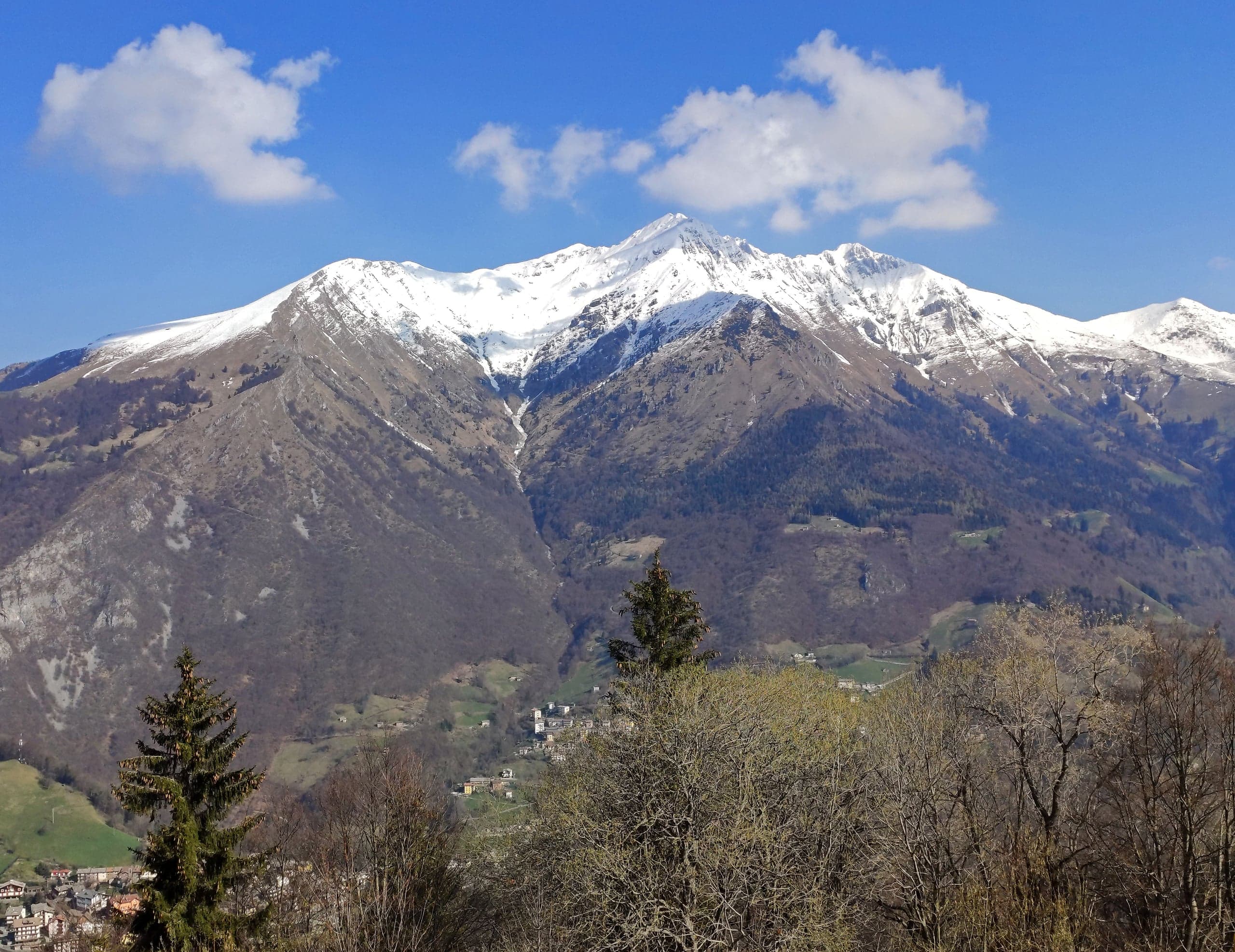
Summits · 2 minutes
Cima di Menna (2,300 m) from Zorzone
Cima di Menna, 2,300 m, from Zorzone on CAI trail 234: 1,250 m and 4 hours up through Val Carnera and the MAGA bivouac, with no water along the way.
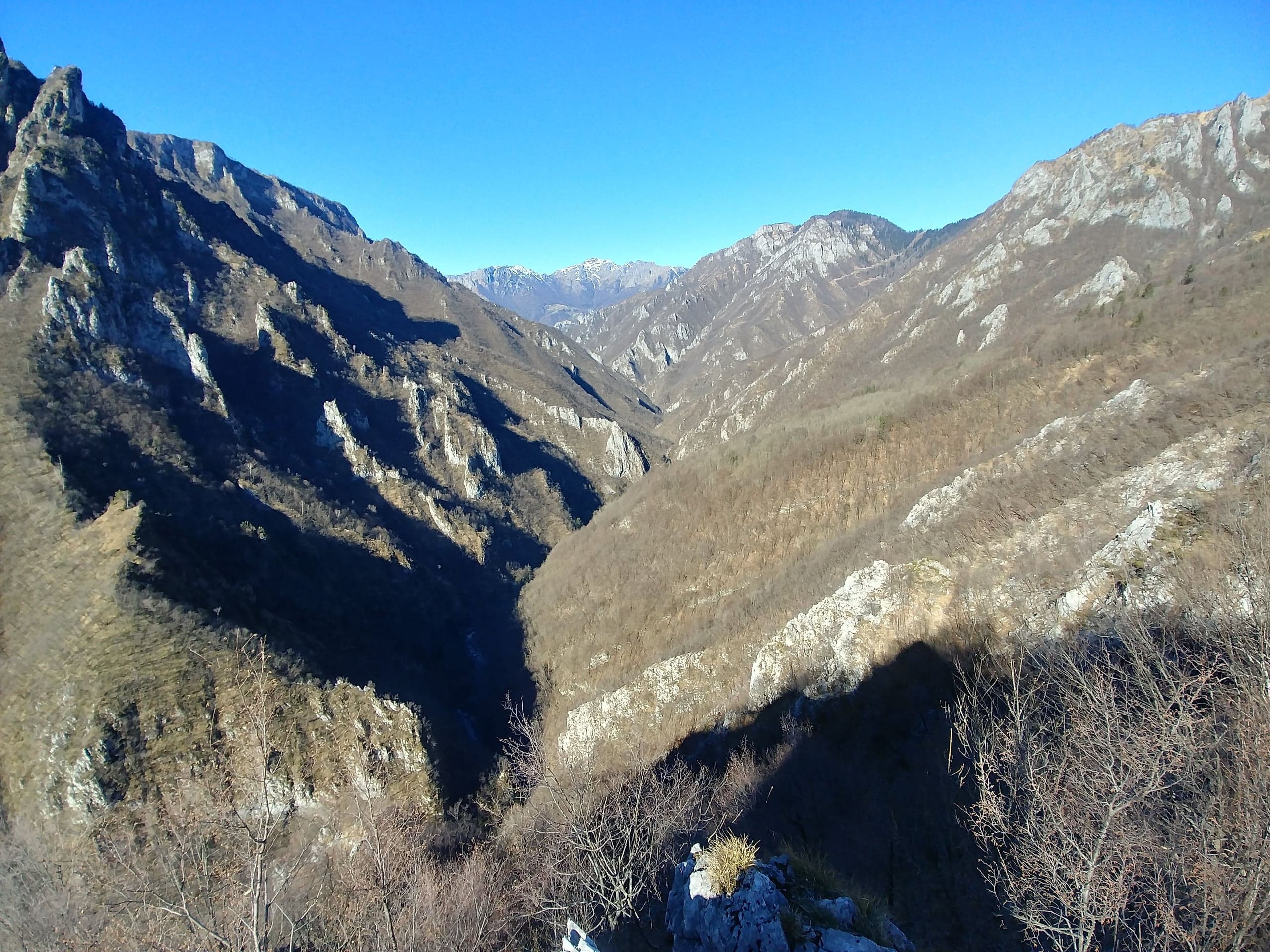
Hikes · 2 minutes
Val Parina: the traverse from Zorzone to Scalvino on CAI trail 259
Val Parina, Zorzone to Scalvino on CAI trail 259: 12 km and 450 m of descent through gorges, chained ledges and the rails of an old timber and marble line.
Churches · 1 minute
Church of the Santissima Trinità in Zorzone
Zorzone's parish church, a parish since 1636, rebuilt between 1745 and 1755 to a design by Giovan Battista Caniana: dome, stucco work and a canvas of 1628.
Villages · 2 minutes
Zorzone, the mining village
Zorzone, at 1,019 metres, is the hamlet of the Val Vedra zinc mines: Caniana's church, the mining museum, 23 frescoes on the houses and the trails to the Menna.