Church · Zambla Bassa · Oltre il Colle
Church of Santa Maria Maddalena in Zambla Bassa
The parish church of Zambla Bassa, independent since 1587 and consecrated in 1737: six altars in deep chapels, Cavagna's altarpiece and a Serassi organ of 1799.
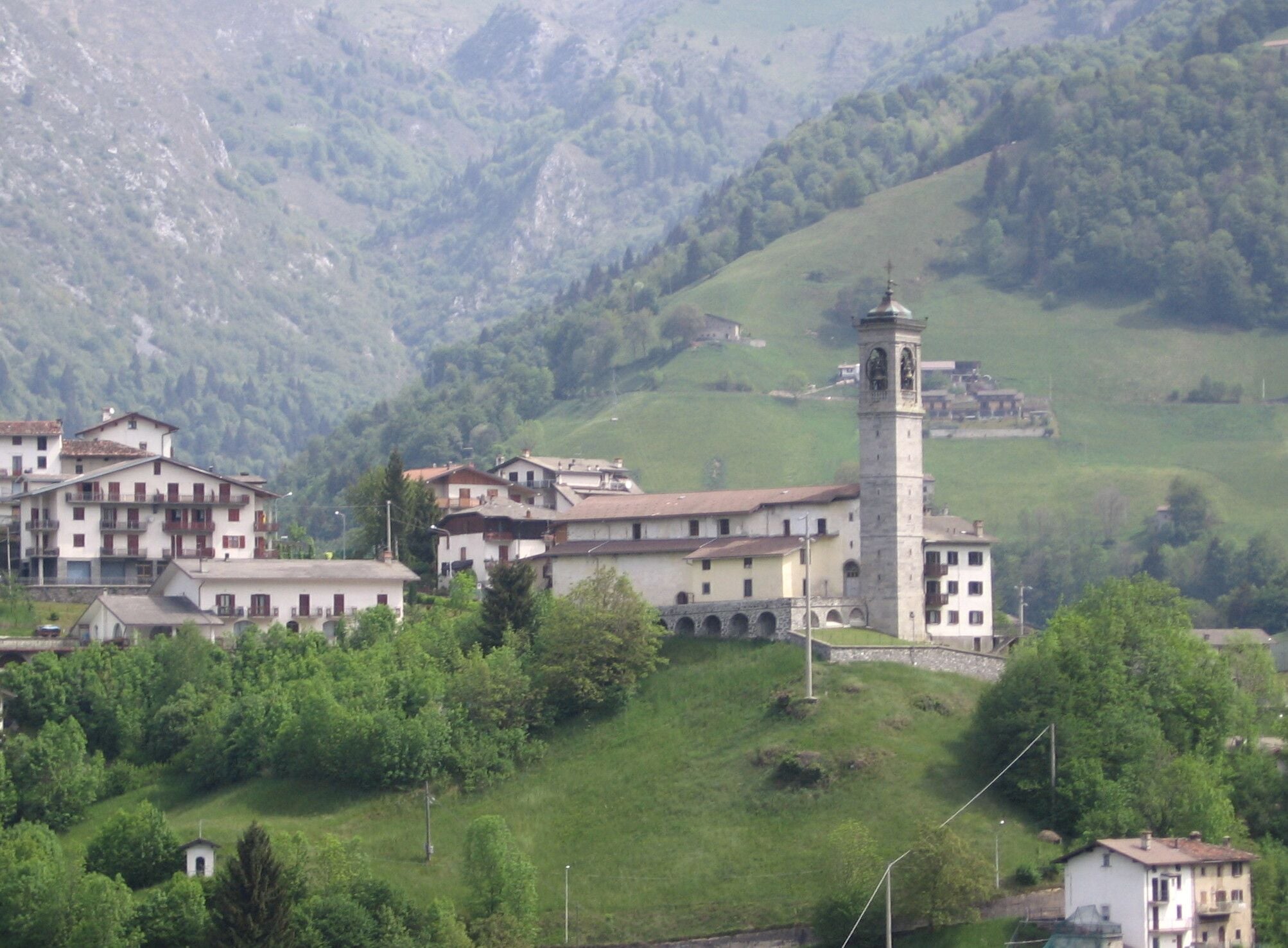
The church of Santa Maria Maddalena is the parish church of Zambla Bassa and, since 1986, of all Zambla: the parish is now called Santa Maria Maddalena e Santa Maria Immacolata and also includes the church of Zambla Alta. It stands on a knoll, with its apse facing south; the façade is plastered and a low portico runs along one side and round the apse, behind which rises the bell tower of squared stone.
Zambla was the first hamlet to break away from San Bartolomeo, in 1587, and according to the 1666 summary of churches it had more parishioners than the main village and Zorzone. Today's building is the one consecrated in 1737, altered in the twentieth century with new altars and an extra bay. Inside are the altarpiece of St Mary Magdalene in Glory by the Bergamo painter Gian Paolo Cavagna, wooden altar frames of the seventeenth and eighteenth centuries, silver-plated copper furnishings and the organ built by Giuseppe Serassi in 1799.
The history of the parish of Zambla
A church dedicated to the Magdalene already existed in Zambla in the sixteenth century. On 17 November 1587 the bishop of Bergamo, Gerolamo Ragazzoni, made it independent of its mother church of San Bartolomeo in Oltre il Colle. In the mid-seventeenth century, at the visit of bishop Gregorio Barbarigo, the parish had one priest, an income of 397 lire, the confraternities of the Blessed Sacrament and of the Rosary and the Misericordia.
The summary of churches compiled in 1666 by the curia's chancellor Giovanni Giacomo Marenzi gives it four altars and 352 parishioners, more than the 196 of San Bartolomeo and the 173 of Zorzone in the same document. The rebuilt church was consecrated on 18 July 1737 by bishop Antonio Redetti, who added the title of the Blessed Virgin Mary to the ancient dedication to the Magdalene.
At the visit of bishop Giovanni Paolo Dolfin, between 1778 and 1781, there were four altars: the school of the Blessed Sacrament at the high altar, the confraternity of the Rosary at the second. The curate was elected by the villagers, who held the patronage, and was assisted by two chaplains; within the parish there was already the oratory of the Immaculate Conception in Zambla Alta. In 1861 the parish counted 403 parishioners and two dependent oratories, the Immacolata and the Addolorata.
The twentieth century: new altars, an extra bay and a united parish
Between 1921 and 1924 the church changed its look. In 1921 the bishop of Mangalore, Paolo Carlo Perini, consecrated the altars of St Anthony of Padua and St Anthony Abbot; in 1922 Giovanni Menicatti, vicar apostolic of northern Henan in China, those of St Barbara and St Mary Magdalene. In 1924 the church was lengthened by one bay and the vault was decorated with medallions of the Magdalene, St Joan of Arc and the theological virtues; on 26 May of the same year bishop Luigi Maria Marelli consecrated the high altar, placing in it relics of Saints Alexander and Pius.
In the second half of the century there was further work, with frescoes by Agostino Manini recorded by Wikipedia. Meanwhile the parish map changed: in 1960 Zambla Alta became an independent parish, but on 20 November 1986 the parish of the Magdalene was succeeded by that of Santa Maria Maddalena e Santa Maria Immacolata, which also took back the benefice of Zambla Alta. Finally, between 1990 and 2000, an altar in wood and stone facing the congregation was placed in the middle of the presbytery.
What it looks like: façade, portico and bell tower
The plastered façade has two registers: below, four pilasters divide it into three sections; above, the side sections are narrower and have no outer pilasters. In the centre are the arched stone doorway and an arched window, also framed in stone; the upper register has a gable roof, the lower one two lower pitches.
The ambulatory portico is the church's most recognisable feature: it runs along one side and wraps round almost the whole apse. Behind the apse rises the bell tower of squared stone, with a gently sloping four-pitched roof: the diocesan survey dates its completion to 1835, the year carved on the underside of an arch of the bell chamber.
What to see inside: the seven bays and the altars
The interior has a single nave covered by a depressed barrel vault and divided into seven bays by stuccoed pilasters. The even-numbered bays hold the six side altars, set in deep chapels; the first and last bays are trapezoidal in plan.
The presbytery is narrower than the nave and rises six steps of Zandobbio marble. The high altar has a green marble top with onyx panels and steps and tabernacle stand in green and white marble; the dome over the presbytery rests on pendentives painted with the four evangelists, and the apse ends in a half-dome, with wooden choir stalls. From the entrance towards the altar you find:
- First bay: in two niches closed by railings, the baptismal font and the crucifix
- Second bay: the polychrome marble altar of St Anthony Abbot and the altar of Our Lady of the Rosary, in marble with a wooden frame of twisted columns
- Third bay: above the side doors, plaster statues of St Joseph and the Magdalene
- Fourth bay: the altar of the Relics and the marble altar of Maria Bambina
- Fifth bay: the two organ lofts
- Sixth bay: the altar of the Madonna and the altar of St Anthony of Padua
- Seventh bay: two doors topped by plaster statues of Aaron and Moses
Gian Paolo Cavagna's altarpiece and the other works
The most important work is on the high altar: St Mary Magdalene in Glory by Gian Paolo Cavagna (1550-1627), a Bergamo painter active in the late sixteenth and early seventeenth centuries. The Centro Storico Culturale Valle Brembana describes it like this: a flight of angels lifts the saint in a strong contrast of light and shadow, with an upward movement that carries gestures and drapery, and in the lower part opens a mountain landscape.
On one of the first side altars an eighteenth-century wooden frame encloses a polyptych with the Madonna and Saints Charles and Francis in the upper register; the lower panels are modern. Here the sources differ: Wikipedia attributes the panels to Cavagna himself, the Centro Storico Culturale to a workshop (“del Lavagna”, as its text has it). On the altar opposite, a nineteenth-century Rosary altarpiece sits in a rich seventeenth-century frame.
The furnishings are completed by a processional cross and a chalice of the seventeenth century worked by chasing and embossing, and by eighteenth-century crosses, candlesticks, altar cards and lamps in silver-plated copper.
The Serassi organ and the bells
The organ was built in 1799 by Giuseppe Serassi, of the family of organ builders active for six generations between 1720 and 1895: the list of Serassi works published by Wikipedia records it precisely in the Magdalene church at Zambla in Oltre il Colle.
The bells, too, tell of the war. The five bells consecrated by bishop Pier Luigi Speranza on 11 June 1861 were requisitioned during the conflict and replaced by the present peal of five bells in B flat, cast by the Capanni foundry and consecrated by bishop Adriano Bernareggi on 22 August 1951.
The other churches of Zambla: the Immacolata, the Madonna di Caravaggio and Santa Lucia
The church of the Immacolata in Zambla Alta was built at the wish of a few inhabitants: by a decree of 28 July 1712 the Senate of the Republic of Venice allowed them to build a chapel of ease of the parish church, blessed in 1718 by the archpriest of Dossena. It has a Greek-cross plan, a porch at the entrance and its bell tower to the left of the presbytery; in 1940 a marble baptistery and the niche of the Sacred Heart were added and in 1951 Giorgio Pruneri of Grosio cast its five bells. The Centro Storico Culturale notes the baroque marble high altar, with the Virgin carved on the frontal, and a seventeenth-century crucifix recently restored to its original colours. Between 1960 and 1986 it was an independent parish.
At the place called Colle di Zambla Alta, on the road to the Arera, the small church of the Madonna di Caravaggio is an eighteenth-century chapel lengthened by one bay in the nineteenth century: on the altar, in a frescoed frame, is the canvas of the apparition of the Madonna of Caravaggio commissioned in 1937 by the Benvenuti family, who had a holiday home in Zambla Alta. Finally, a short distance from the parish church stands the small church of Santa Lucia, which in 1861 was listed as the oratory of Our Lady of Sorrows.
In detail
Works and dates of the church
| Work or alteration | Artist or maker | Date | Source and notes |
|---|---|---|---|
| St Mary Magdalene in Glory, high altarpiece | Gian Paolo Cavagna (1550-1627) | Early seventeenth century | Centro Storico Culturale Valle Brembana |
| Polyptych with the Madonna and Saints Charles and Francis, in an eighteenth-century wooden altar frame | Gian Paolo Cavagna according to Wikipedia; a workshop according to the Centro Storico Culturale | Not given | The sources differ; the lower panels are modern |
| Rosary altarpiece in a seventeenth-century frame | Not given | Nineteenth century (the painting) | Centro Storico Culturale Valle Brembana |
| Consecration of the rebuilt church | Bishop Antonio Redetti | 18 July 1737 | Lombardia Beni Culturali; BeWeB |
| Organ | Giuseppe Serassi | 1799 | BeWeB; list of Serassi works on Wikipedia |
| Completion of the bell tower | Not given | 1835 | Date carved in an arch of the bell chamber (BeWeB) |
| Altars of St Anthony of Padua and St Anthony Abbot | Consecrated by bishop Paolo Carlo Perini | 1921 | BeWeB |
| Altars of St Barbara and St Mary Magdalene | Consecrated by bishop Giovanni Menicatti | 1922 | BeWeB |
| New bay and vault medallions | Not given | 1924 | BeWeB |
| Peal of five bells in B flat | Capanni foundry | 1951 | Consecrated on 22 August 1951 by bishop Adriano Bernareggi (BeWeB) |
| Altar facing the people in wood and stone | Not given | 1990-2000 | BeWeB |
Where the maker or date is not given, the sources consulted do not state it.
Practical tips
Before you set off
- The municipality's three parish churches, in Zambla Bassa, in the main village and in Zorzone, have the same parish priest and can be seen in the same morning.
- For the interior, aim for services or phone the parish (0345 95124): mass times are not published.
- Cavagna's altarpiece is on the high altar, at the end of the raised presbytery: the mountain landscape is in the lower part of the painting.
- Make a detour to Zambla Alta for the church of the Immacolata, born of a permit from the Republic of Venice in 1712.
- Coming from the Colle di Zambla you pass the small church of the Madonna di Caravaggio, on the road to the Arera.
FAQ
Frequently asked questions: Church of Santa Maria Maddalena in Zambla Bassa
Since when has Zambla had its own parish?
Since 17 November 1587, when the bishop of Bergamo, Gerolamo Ragazzoni, separated the church of Santa Maria Maddalena from the parish of San Bartolomeo in Oltre il Colle. It was the first hamlet of the municipality to have a parish of its own.
Who painted the high altarpiece in Zambla Bassa?
Gian Paolo Cavagna (1550-1627), a Bergamo painter: it is a St Mary Magdalene in Glory, with angels lifting the saint and a mountain landscape in the lower part.
How old is the organ of the church of Zambla?
It dates from 1799: it was built by Giuseppe Serassi, of the Serassi family of organ builders, active between 1720 and 1895.
When was the church of Santa Maria Maddalena consecrated?
On 18 July 1737, by bishop Antonio Redetti, who added the title of the Blessed Virgin Mary to that of the Magdalene. In 1924 the church was lengthened by one bay and on 26 May that year the high altar was consecrated.
Do Zambla Alta and Zambla Bassa share the same parish?
Yes. Zambla Alta was an independent parish from 1960, but since 20 November 1986 the two hamlets have formed the parish of Santa Maria Maddalena e Santa Maria Immacolata, based in Zambla.
What is the church of Zambla Bassa like?
A single nave with a depressed barrel vault, seven bays, six side altars in deep chapels, a presbytery raised six steps of Zandobbio marble and a dome with the four evangelists on the pendentives. Outside, a portico runs along one side and round the apse.
How do you contact the parish of Zambla?
Via Vidali 36, telephone 0345 95124, email zambla@diocesibg.it, according to the directory of the diocese of Bergamo, which does not publish mass times.
Sources
- Lombardia Beni Culturali, parrocchia di Santa Maria Maddalena (sec. XVI - 1986) · www.lombardiabeniculturali.it · accessed on 1 October 2026
- Lombardia Beni Culturali, parrocchia di Santa Maria Maddalena e Santa Maria Immacolata (1960 - 1986) · www.lombardiabeniculturali.it · accessed on 1 October 2026
- Lombardia Beni Culturali, parrocchia di Santa Maria Maddalena e Santa Maria Immacolata (1986 - [1989]) · www.lombardiabeniculturali.it · accessed on 1 October 2026
- Lombardia Beni Culturali, parrocchia di San Bartolomeo apostolo (dati del 1666) · www.lombardiabeniculturali.it · accessed on 1 October 2026
- Lombardia Beni Culturali, parrocchia della Santissima Trinità (dati del 1666) · www.lombardiabeniculturali.it · accessed on 1 October 2026
- BeWeB, censimento della diocesi: Chiesa di Santa Maria Maddalena · www.beweb.chiesacattolica.it · accessed on 1 October 2026
- BeWeB, Chiesa di Santa Maria Immacolata (Zambla Alta) · www.beweb.chiesacattolica.it · accessed on 1 October 2026
- BeWeB, Chiesa della Madonna di Caravaggio (Zambla Alta) · www.beweb.chiesacattolica.it · accessed on 1 October 2026
- BeWeB, Chiesa di Santa Lucia · www.beweb.chiesacattolica.it · accessed on 1 October 2026
- Diocesi di Bergamo, annuario: Zambla S. Maria Maddalena e S. Maria Immacolata · diocesibg.it · accessed on 1 October 2026
- Centro Storico Culturale Valle Brembana, schede Oltre il Colle · culturabrembana.com · accessed on 1 October 2026
- Wikipedia, Chiesa di Santa Maria Maddalena (Oltre il Colle) · it.wikipedia.org · accessed on 1 October 2026
- Wikipedia, Gian Paolo Cavagna · it.wikipedia.org · accessed on 1 October 2026
- Wikipedia, Serassi (elenco delle opere) · it.wikipedia.org · accessed on 1 October 2026
- Wikidata, chiesa di Santa Maria Maddalena (Q105037771) · www.wikidata.org · accessed on 1 October 2026
- OpenStreetMap, chiesa parrocchiale di Santa Maria Maddalena · www.openstreetmap.org · accessed on 1 October 2026
Page verified on
Nearby
More pages from around here
Hikes · 2 minutes
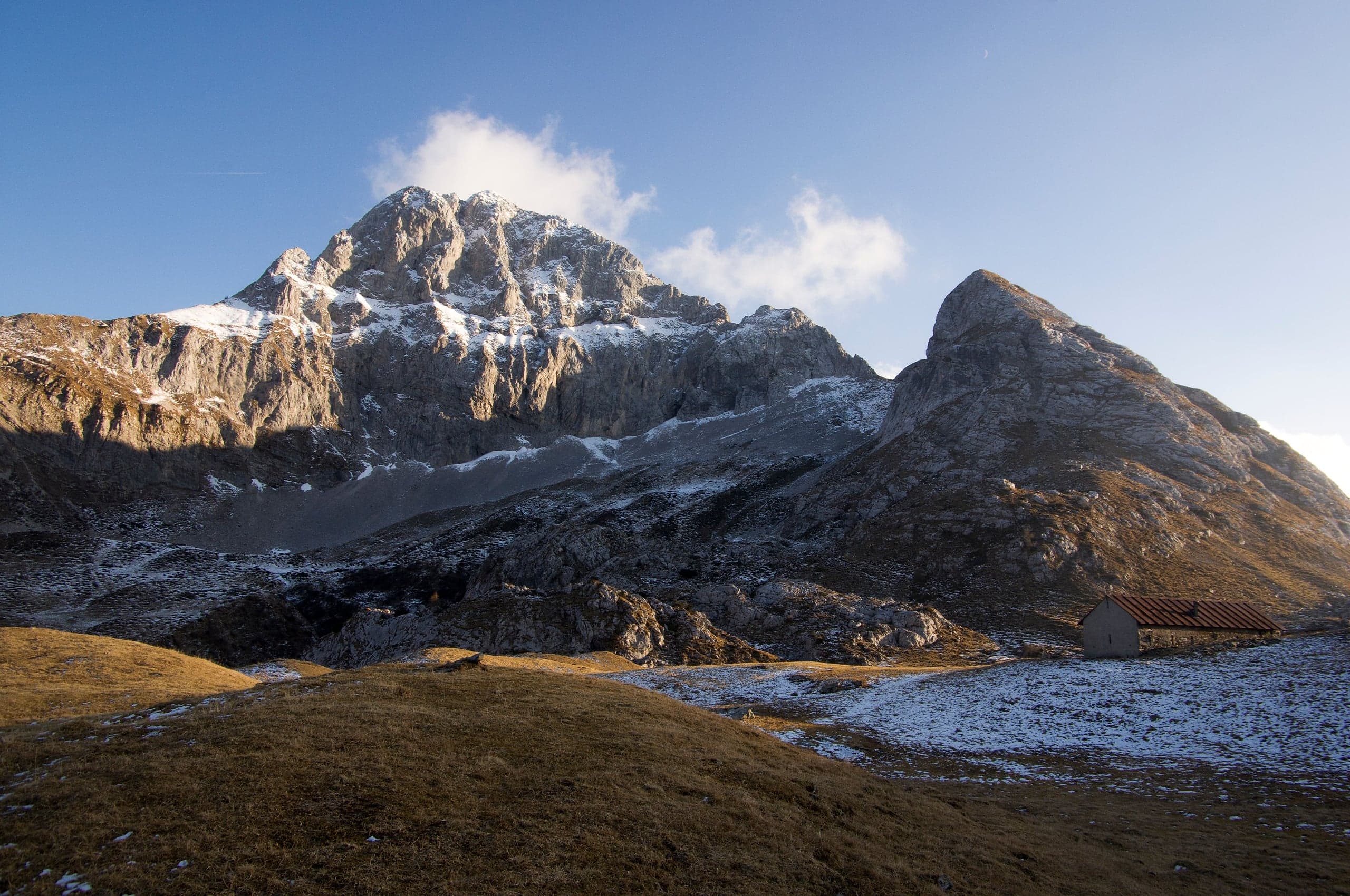
Sentiero dei Fiori “Claudio Brissoni”
Sentiero dei Fiori Claudio Brissoni: a CAI loop of about 3 hours from the Capanna 2000 to Passo Branchino, 1,821–2,078 m, on the flowering slopes of the Arera.
Summits · 2 minutes
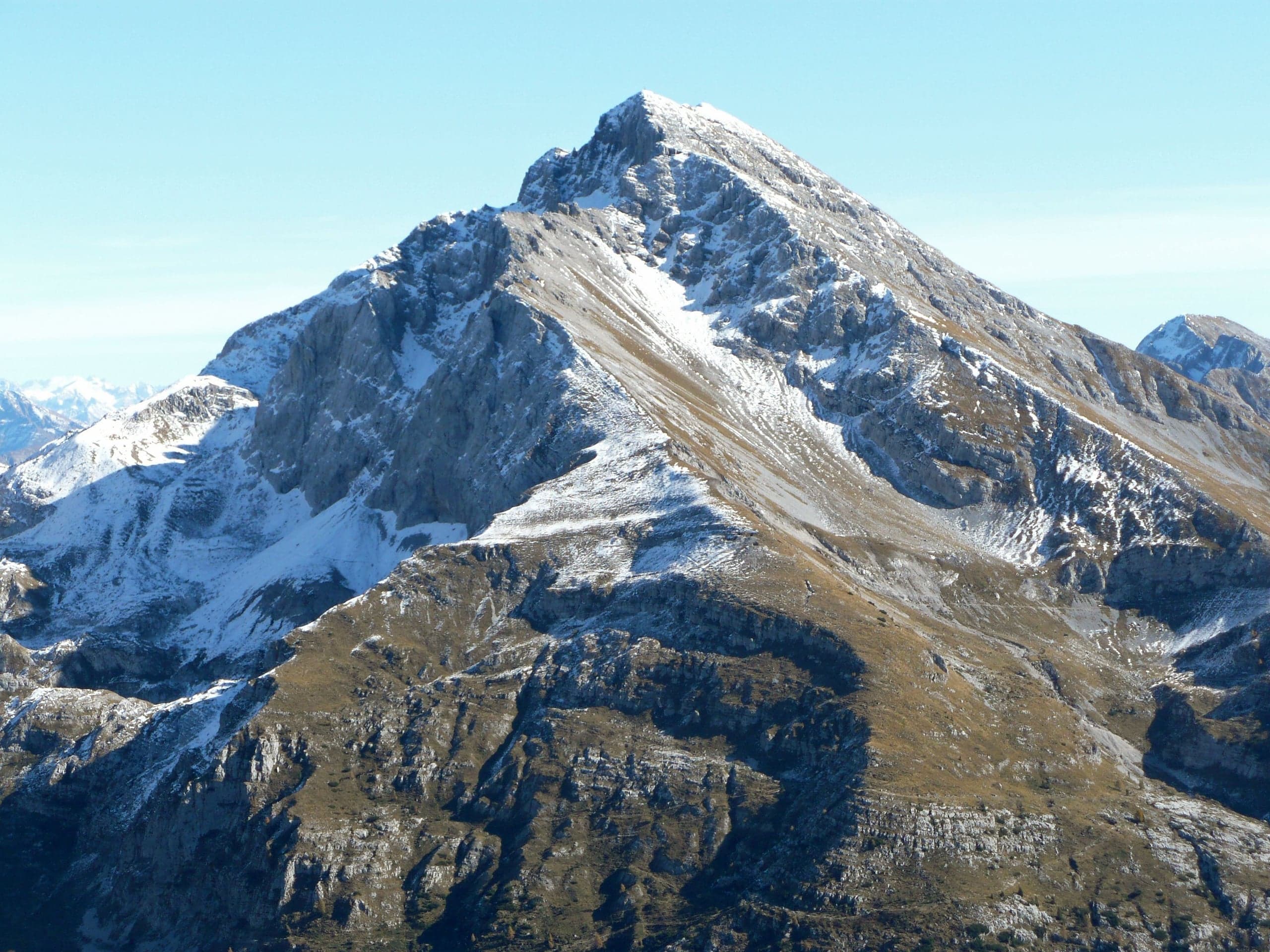
Pizzo Arera (2,512 m) by the south normal route
Pizzo Arera, 2,512 m, by the south normal route: from the Alpe Arera car park 922 m of ascent and about 2 h 30, with a protected gully just below the summit.
Summits · 2 minutes
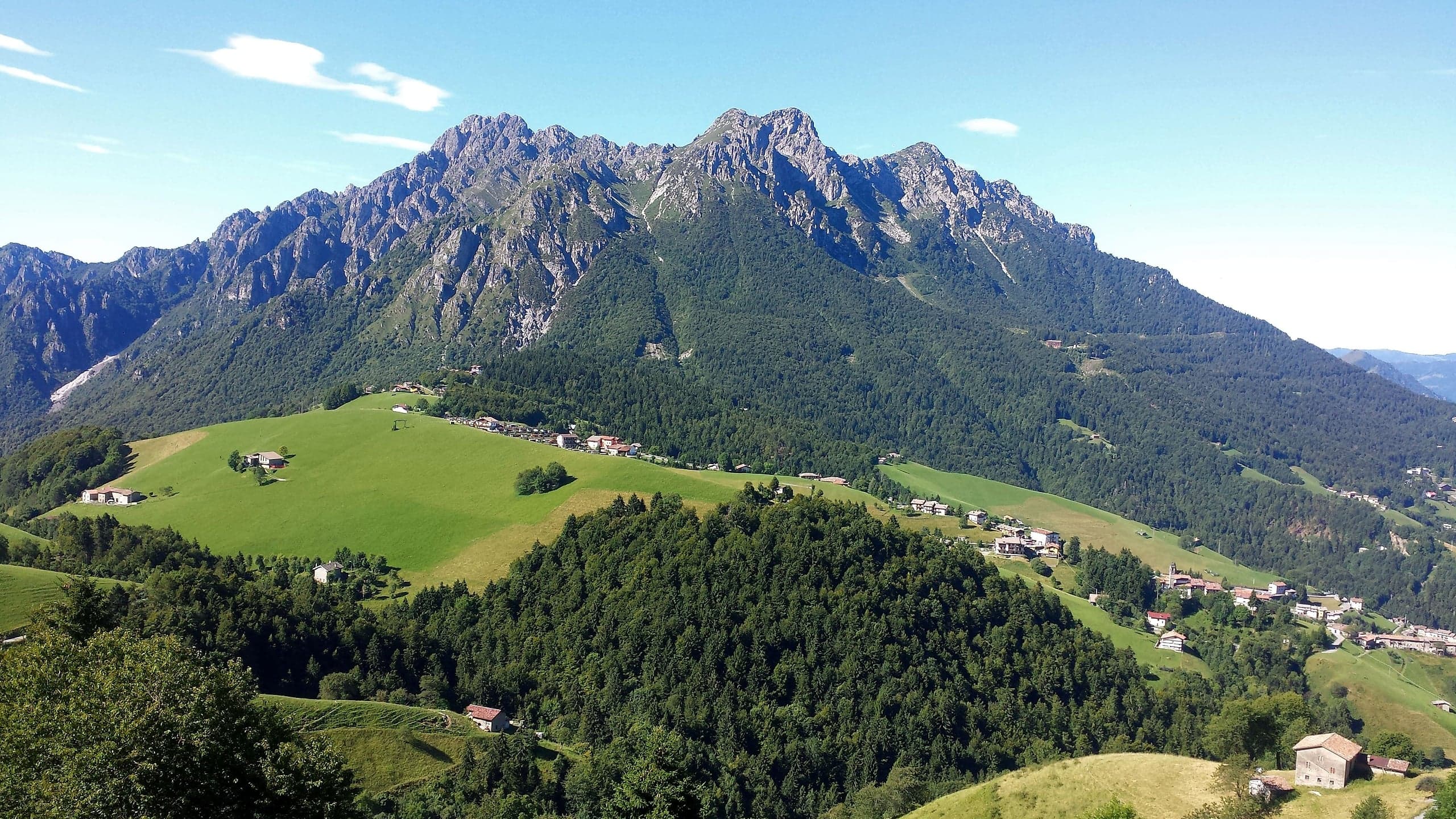
Monte Alben (2,019 m) from the Colle di Zambla
Monte Alben, 2,019 m, from the Colle di Zambla on CAI trail 501: 750 m and 2 h 15 via the Col dei Brassamonti, Passo della Forca and the final EE ridge.
Mountain huts · 2 minutes
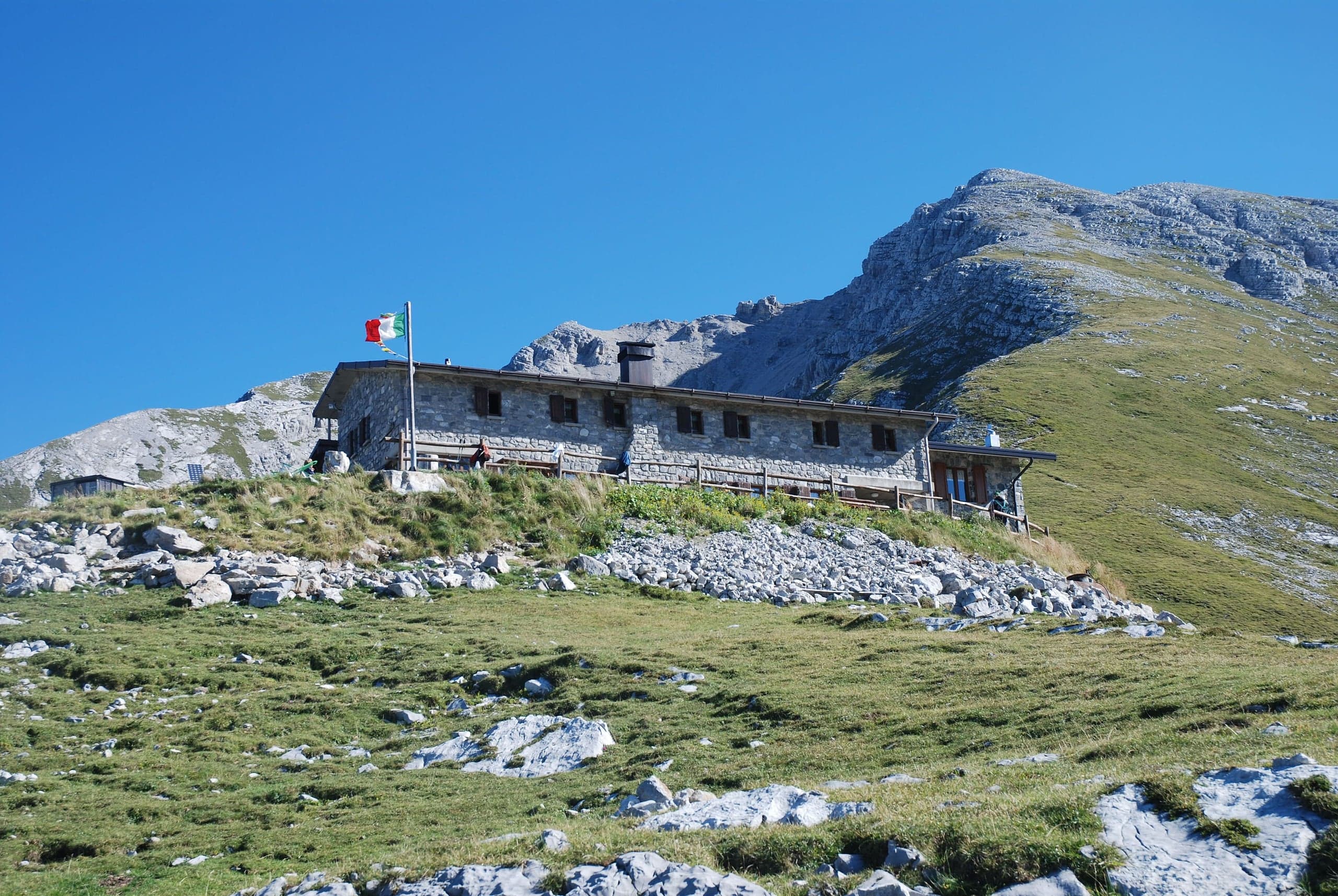
Capanna 2000 hut
Capanna 2000 hut, 1,960 m below the Pizzo Arera: owned by Oltre il Colle, 25 beds, an hour from the Alpe Arera car park. Opening periods, booking and contacts.