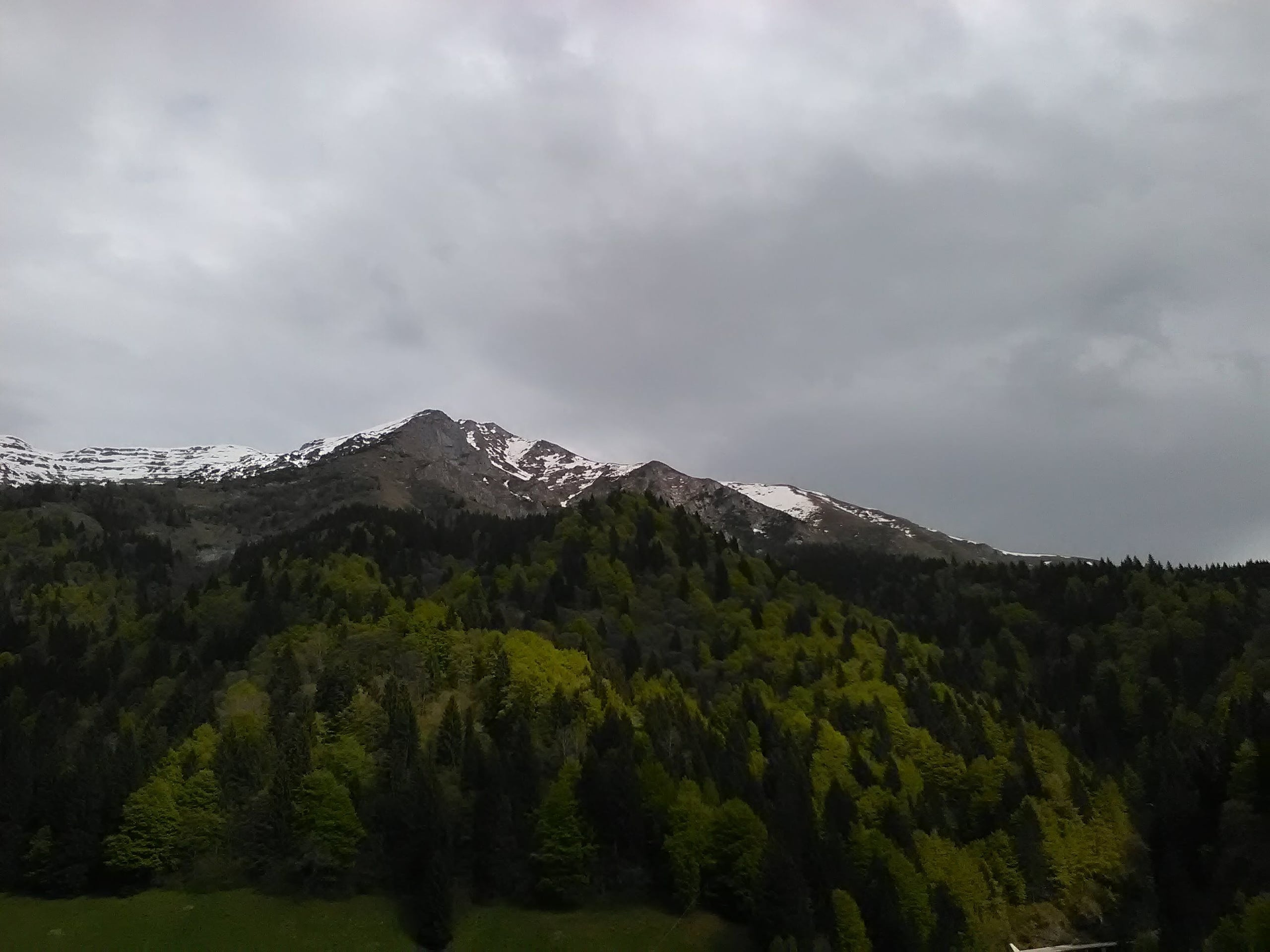
Nature · Zambla Alta · Oltre il Colle
Giuliano Mauri's Cattedrale Vegetale
Giuliano Mauri's Cattedrale Vegetale above Zambla Alta: five naves of woven poles around 42 beech trees, opened in 2010 and badly damaged by storm Vaia in 2018.
Notice
From 5 October to 18 December 2026, between 8.00 and 17.00, the Plassa–Alpe Arera road has temporary closures managed by flaggers during logging work at Grumello (mayor's order no. 39/2026, which may be extended): allow for waits, or walk up from Plassa.
The Cattedrale Vegetale is a work of environmental art built in 2010 in a clearing above Zambla Alta, on an isolated knoll beside the road that climbs from Plassa towards the Pizzo Arera, at Grumello, 1,345 metres up. It has the shape of a church with five naves but no walls or roof: its 42 columns are cages of woven poles and branches, and a beech tree was planted inside each one.
The idea of the Lodi-born artist Giuliano Mauri was that the wood, as it rotted, would make way for the trees: within about twenty years the beeches would take on the shape of the naves and only the design of the man-made structure would remain. Mauri prepared the project in 2008-2009 and died before seeing it built; the work, commissioned by the Orobie Bergamasche Park with the municipalities of Oltre il Colle, Ardesio and Roncobello, is the symbol of the “Monte Arera” project devoted to the park's alpine plants.
Nature arrived ahead of schedule. Storm Vaia, at the end of October 2018, destroyed about two thirds of the scaffolding and the Park chose not to rebuild it, letting the work carry on as a wood. Visitors today find a group of young beeches with a few columns still standing, not the cathedral of the 2010 photographs: it is a place to visit knowing what you are going to see.
Who was Giuliano Mauri
Giuliano Mauri was born in Lodi Vecchio on 11 January 1938 and died in Lodi on 29 May 2009. He was one of the Italian names in environmental art: with branches and trunks he built what he called “natural architectures”, works designed to decay over time and leave room for nature. He took part in the Venice Biennale in 1976.
His works include the Mulini, the Scala del Paradiso, the Bosco sull'isola at the springs of the Tormo, the Osservatori estimativi at Görlitz and Zgorzelec, on the border between Germany and Poland, and the Voliera per umani, an aviary for humans, in Monza Park, from 2006. His first Cattedrale vegetale dates from 2001, at Arte Sella in Trentino. The one at Oltre il Colle was built in 2010 as the first tribute to the artist after his death.
The story: from the 2008 project to the 2010 opening
The idea of a “green cathedral” on the Arera is older than the work. In summer 2008 L'Eco di Bergamo reported the laying of the first stone, on 19 July, of a plant architecture on municipal land at Plassa, promoted by the president of the Orobie Park Franco Grassi and by the mayor Rosanna Manenti: for the time being three wooden arches with plants at their sides, the entrance to a project to be developed over time.
The final project is the one Mauri drew in 2008-2009. Construction, in 2010, took almost five months: the work was entrusted to the Consorzio forestale dell'Alto Serio of Gromo, the artistic direction to Paola Tognon and the building to the artist's son, Roberto Mauri, with a team of carpenters. The Cathedral was opened on Saturday 4 September 2010, together with the project to develop the Flower and Butterfly trails, as part of the Park's events for the International Year of Biodiversity.
How it is made: size, materials and the weaving technique
The Cathedral is built with the old art of weaving, using flexible wood, stakes, nails and ropes, materials chosen to follow the natural cycle of growth and decay. Mauri had oriented it along the path of the sun and not towards the arriving visitor, the curator Paola Tognon explained at the opening, to make people enter it little by little rather than take it in at a glance. In 2019 the Park recalled that within 15-20 years the beeches were expected to reach 13 metres.
The figures for the work, as reported by L'Eco di Bergamo in 2010, are these:
- five naves and 42 columns
- 1,800 fir poles and 600 chestnut branches
- about six thousand metres of hazel branches
- 42 beech trees, one inside each column
- height from 5 to 21 metres, length 28.5 metres, width 24 metres
- 650 square metres of surface
Storm Vaia and the state of the Cathedral today
At the end of October 2018 storm Vaia struck the Orobie with gusts of over 200 kilometres an hour. The sources give different dates, 28 October for L'Eco di Bergamo, Monday 29 for BergamoNews; either way about two thirds of the scaffolding was destroyed or badly damaged, and the ruined columns were removed for safety. The trees remained, some still with their column, others without support.
In December 2019 the council of the Orobie Park decided not to spend money on rebuilding the scaffolding: the Cathedral would go on growing with what was left, maintained together with the municipality, and signs would tell visitors its story, from its conception to the storm. The Park's president, Yvan Caccia, explained that growth would be less regular than planned, because the storm had simply brought forward what time would have done anyway.
In August 2023 Prima Bergamo counted 33 beeches out of 42 and quoted the mayor Ferruccio Ghilardi speaking to L'Eco di Bergamo: cleaning done, some trees already tall, the nine missing ones to be replanted in agreement with the Park. In June 2026 Valbrembanaweb wrote that, after some years of maintenance, the Cathedral has started growing again, although the soil is not very fertile for beeches, and announced a celebration organised by the municipality for Sunday 21 June, with pruning demonstrations, a concert and local products.
How to get to the Cattedrale Vegetale and where to park
From Oltre il Colle drive up to Zambla Alta and continue on the road to Plassa, the place where hikes towards the Arera and the Capanna 2000 also start. You cannot stop on the road that climbs to the Cathedral: leave the car in the Plassa car parks. Higher up parking is paid, with tickets from the machine; Lorenzo Taccioli, in the account published on his blog in 2018 and updated in 2020, described the herringbone car park before the narrow section as free.
From the car park continue on foot along the tarmac road: two hairpin bends in about 500 metres, a quarter of an hour of fairly steep climbing according to the same account. After the second bend, on the left, a clearing with the Park's large sign marks the entrance, and a short path at the foot of the hillock leads in a minute to the Cathedral. Next to it are the Park's panels on the Cathedral, the Flower Trail and the Butterfly Trail.
You can also walk from Zorzone: the signpost beside the Cathedral shows path H33 to the Piani di Bracca in 30 minutes and to Zorzone in 1 hour 10 minutes.
Mauri's other plant cathedrals: Arte Sella and Lodi
Mauri's first Cattedrale vegetale dates from 2001, at Arte Sella in the Val di Sella, near Malga Costa: according to the official website of the Oltre il Colle Cathedral it is made of hornbeams and measures 82 by 15 metres, 12 metres high, over 1,230 square metres.
The third was built in Lodi, near the bridge over the Adda, under the artistic direction of his sons Roberto and Mauro, and opened in April 2017. Damaged by storms, it was completely dismantled in spring 2019.
Practical tips
Before you set off
- Go knowing what you will see: after Vaia only a few wooden columns remain and the Cathedral is above all a group of young beeches.
- Leave the car at Plassa: you cannot stop on the road that climbs, and the last stretch is a quarter of an hour on foot.
- The best time is from spring to autumn, when the beeches are in leaf.
- Wear walking shoes: from the clearing you enter the glade on a short earth path.
- It combines well with the Flower Trail and the Capanna 2000, which start from the upper car park at 1,600 metres.
FAQ
Frequently asked questions: Giuliano Mauri's Cattedrale Vegetale
Where is the Cattedrale Vegetale of Oltre il Colle?
At Grumello, above Zambla Alta, on the road that climbs from Plassa towards the Pizzo Arera, at 1,345 metres, in the municipality of Oltre il Colle.
Who made the Cattedrale Vegetale and when?
It was designed by the Lodi-born artist Giuliano Mauri (1938-2009) in 2008-2009. It was built after his death, in 2010, by the Consorzio forestale dell'Alto Serio with his son Roberto Mauri and a team of carpenters, and opened on 4 September 2010.
How is the Cattedrale Vegetale made?
Five naves and 42 columns of woven poles and branches: 1,800 fir poles, 600 chestnut branches and about six thousand metres of hazel branches, with a beech tree inside each column. From 5 to 21 metres high, 28.5 long and 24 wide, it covers 650 square metres.
Does the Cattedrale Vegetale still exist after storm Vaia?
Partly. At the end of October 2018 Vaia destroyed about two thirds of the scaffolding and the Park chose not to rebuild it. In 2023 there were 33 beeches out of 42, with the nine missing ones to be replanted; in June 2026 the municipality celebrated the renewed growth.
Where do you park for the Cattedrale Vegetale?
At the Plassa car parks, above Zambla Alta: you cannot stop on the road that climbs. From there you walk along the road for two hairpin bends, about 500 metres and a quarter of an hour, to the clearing with the Park's sign.
How many plant cathedrals did Giuliano Mauri make?
Three: the first at Arte Sella, in Trentino, in 2001; the one at Oltre il Colle, built in 2010 after his death; and one in Lodi, opened in 2017 and dismantled in 2019 after storm damage.
When is the best time to visit the Cattedrale Vegetale?
From spring to autumn, when the beeches are in leaf and the road to Plassa is free of snow. It is an outdoor work in a clearing: shoes suited to a short stretch of path are enough.
Sources
- Comune di Oltre il Colle – ordinanza del sindaco n. 39/2026, chiusure temporanee con movieri della strada Plassa/Arera 1600 dal 5 ottobre al 18 dicembre 2026 · www.comune.oltreilcolle.bg.it · accessed on 1 October 2026
- L'Eco di Bergamo, «Oltre il Colle, tutto pronto per la cattedrale verde» (2 settembre 2010) · www.ecodibergamo.it · accessed on 1 October 2026
- L'Eco di Bergamo, «Inaugurata la cattedrale vegetale. Domina la Conca di Oltre il Colle» (4 settembre 2010) · www.ecodibergamo.it · accessed on 1 October 2026
- L'Eco di Bergamo (2008), ripreso da Valle Brembana News: la «cattedrale verde» alla Plassa (copia d'archivio) · web.archive.org · accessed on 1 October 2026
- BergamoNews, «Maltempo, rasa al suolo dal vento la Cattedrale Vegetale di Oltre il Colle» (30 ottobre 2018) · www.bergamonews.it · accessed on 1 October 2026
- L'Eco di Bergamo, «Un anno fa fu semidistrutta dal nubifragio. Ma la Cattedrale vegetale ricrescerà» (10 dicembre 2019) · www.ecodibergamo.it · accessed on 1 October 2026
- Prima Bergamo, «Oggi sembra un bosco, ma la Cattedrale Vegetale di Oltre il Colle sta per rinascere» (7 agosto 2023) · primabergamo.it · accessed on 1 October 2026
- Valbrembanaweb, «Oltre il Colle, la Cattedrale vegetale torna a crescere» (23 giugno 2026) · www.valbrembanaweb.com · accessed on 1 October 2026
- Parco delle Orobie Bergamasche, Cattedrale Vegetale · www.parcorobie.it · accessed on 1 October 2026
- Sito ufficiale della Cattedrale Vegetale di Oltre il Colle · it.cattedralevegetale.info · accessed on 1 October 2026
- Wikipedia, Giuliano Mauri · it.wikipedia.org · accessed on 1 October 2026
- Wikipedia, Oltre il Colle (la Cattedrale Vegetale) · it.wikipedia.org · accessed on 1 October 2026
- Lorenzo Taccioli, «Cattedrale Vegetale Oltre il Colle: cos'è e come raggiungerla» (2018, aggiornato 2020) · www.lorenzotaccioli.it · accessed on 1 October 2026
- Associazione Alpina Excelsior, Sentiero dei Fiori: parcheggio a pagamento al piazzale di 1.600 m · alpinaexcelsior.it · accessed on 1 October 2026
- Wikimedia Commons, cartello dei sentieri accanto alla Cattedrale (foto di Amadvance, 2022) · commons.wikimedia.org · accessed on 1 October 2026
- OpenStreetMap, Cattedrale vegetale · www.openstreetmap.org · accessed on 1 October 2026
- OpenStreetMap, parcheggi della Plassa (mappa) · www.openstreetmap.org · accessed on 1 October 2026
Page verified on
Nearby
More pages from around here
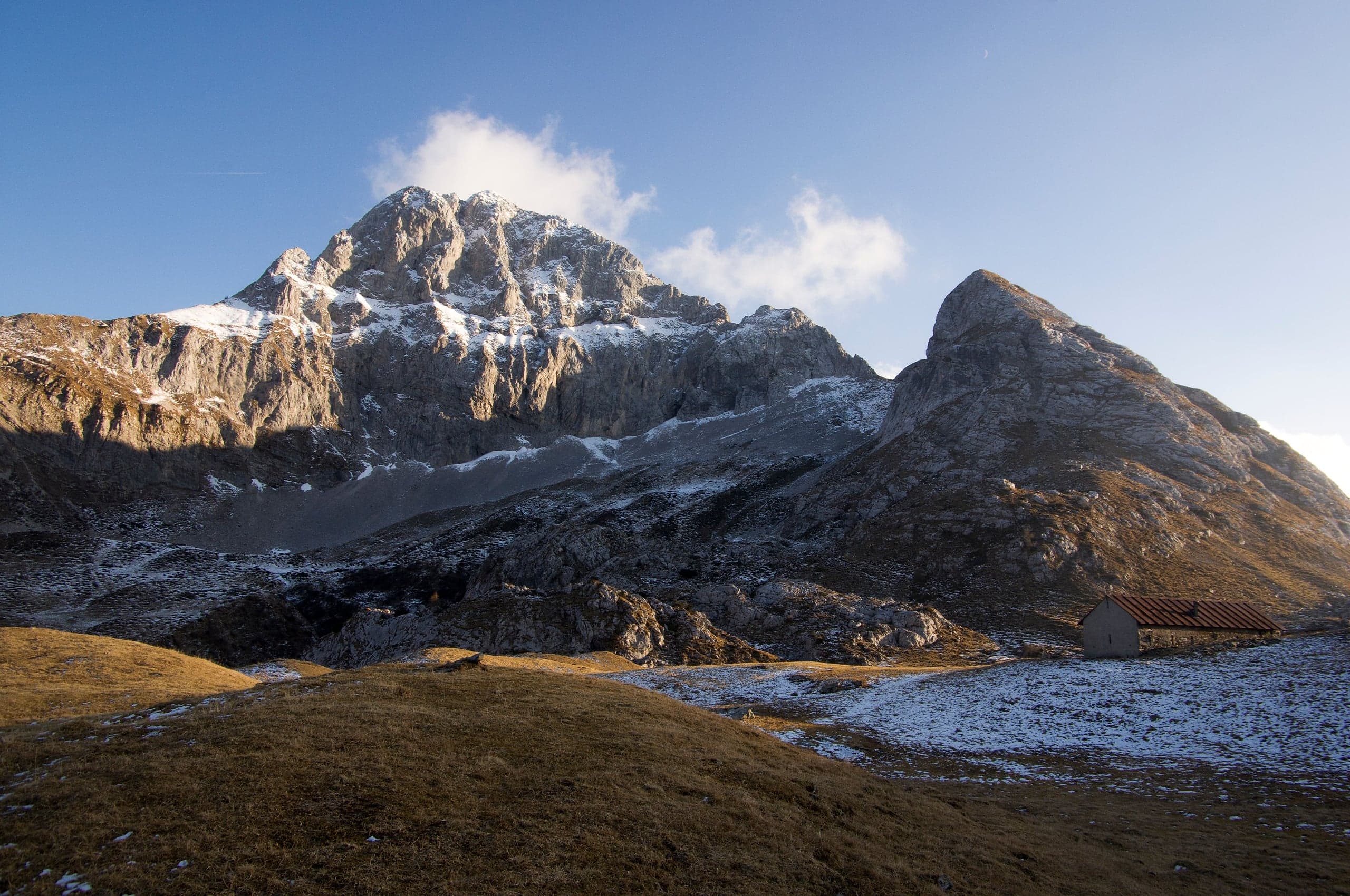
Hikes · 2 minutes
Sentiero dei Fiori “Claudio Brissoni”
Sentiero dei Fiori Claudio Brissoni: a CAI loop of about 3 hours from the Capanna 2000 to Passo Branchino, 1,821–2,078 m, on the flowering slopes of the Arera.
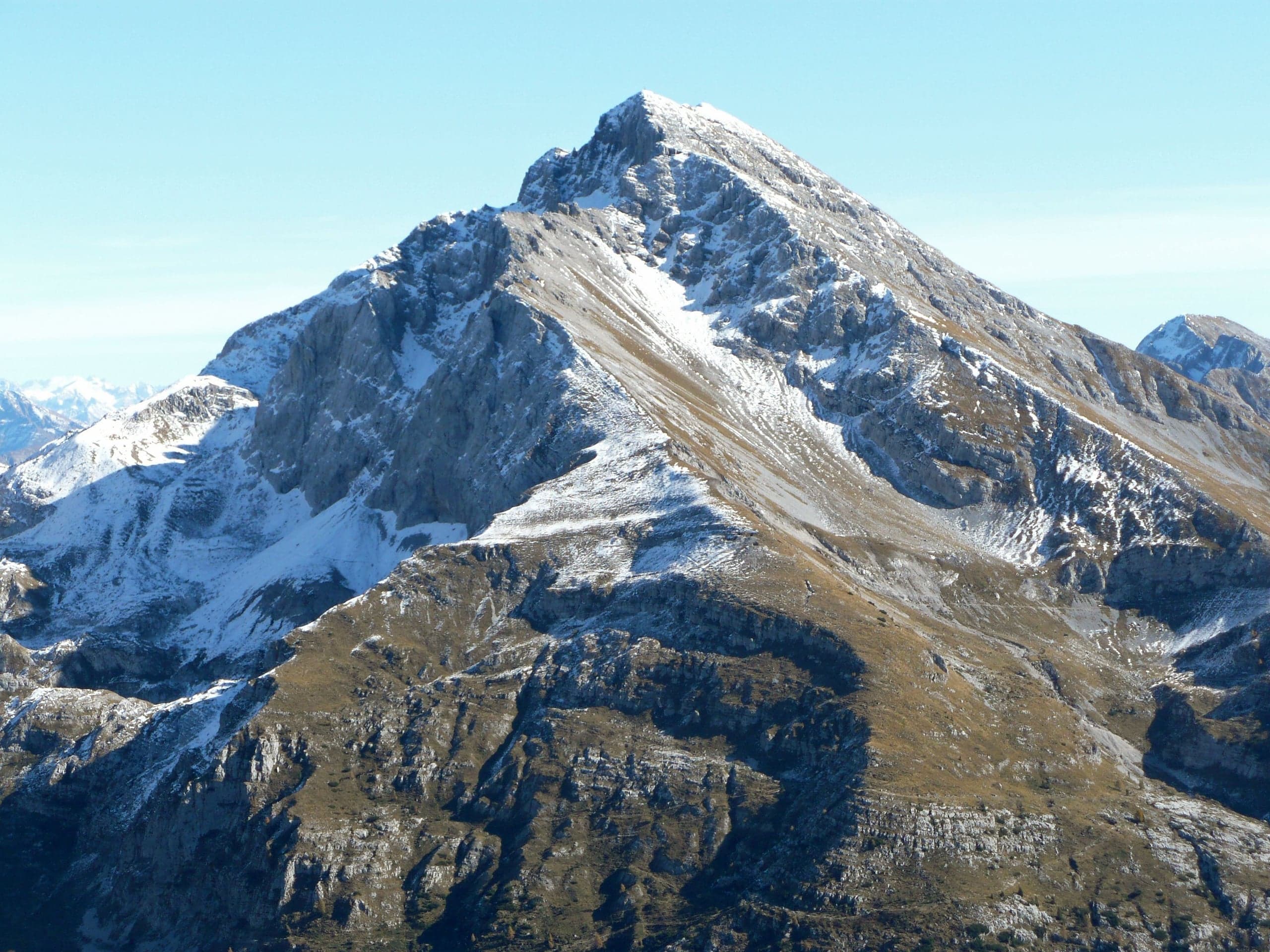
Summits · 2 minutes
Pizzo Arera (2,512 m) by the south normal route
Pizzo Arera, 2,512 m, by the south normal route: from the Alpe Arera car park 922 m of ascent and about 2 h 30, with a protected gully just below the summit.
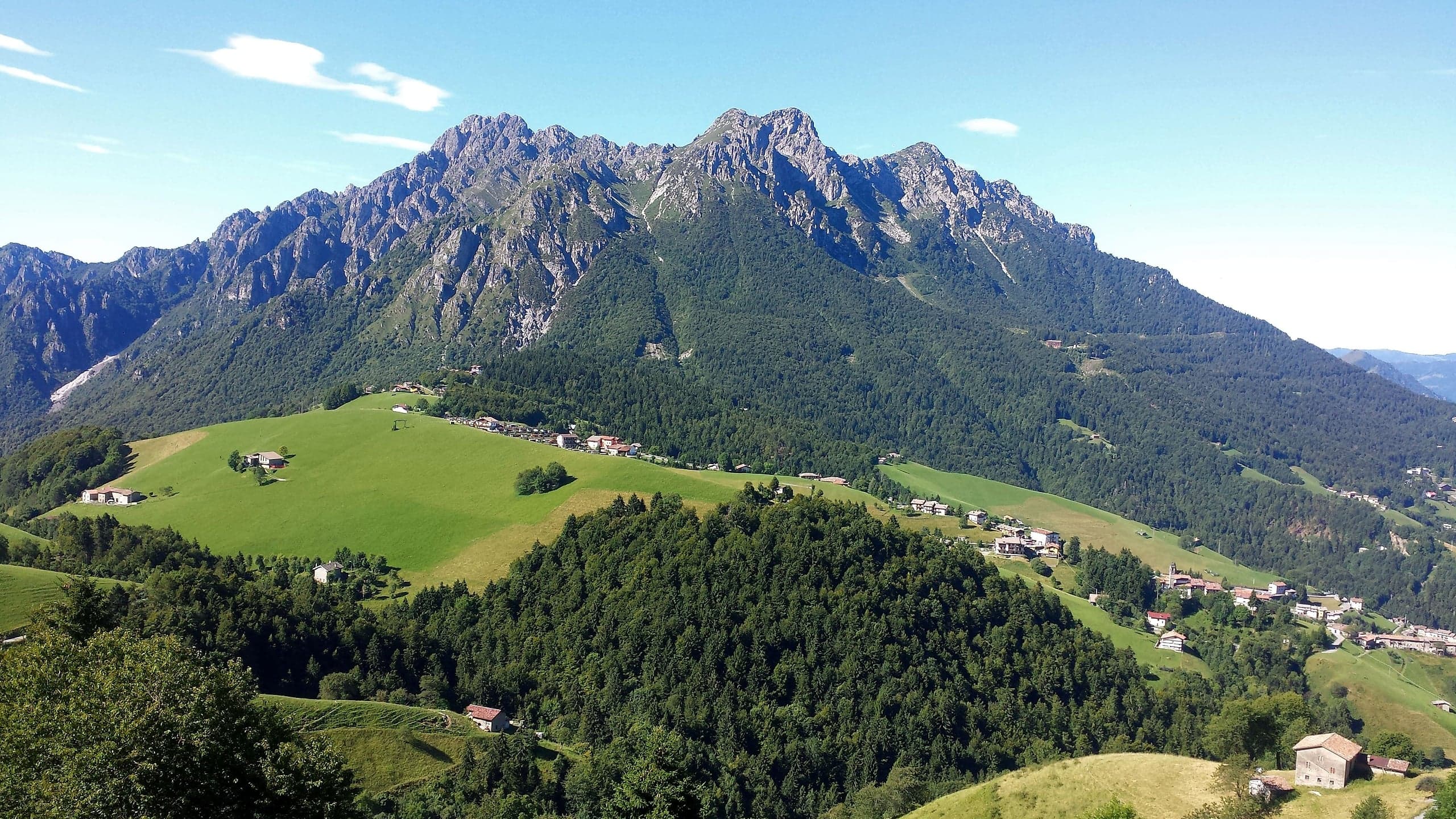
Summits · 2 minutes
Monte Alben (2,019 m) from the Colle di Zambla
Monte Alben, 2,019 m, from the Colle di Zambla on CAI trail 501: 750 m and 2 h 15 via the Col dei Brassamonti, Passo della Forca and the final EE ridge.
Mountain huts · 2 minutes
Capanna 2000 hut
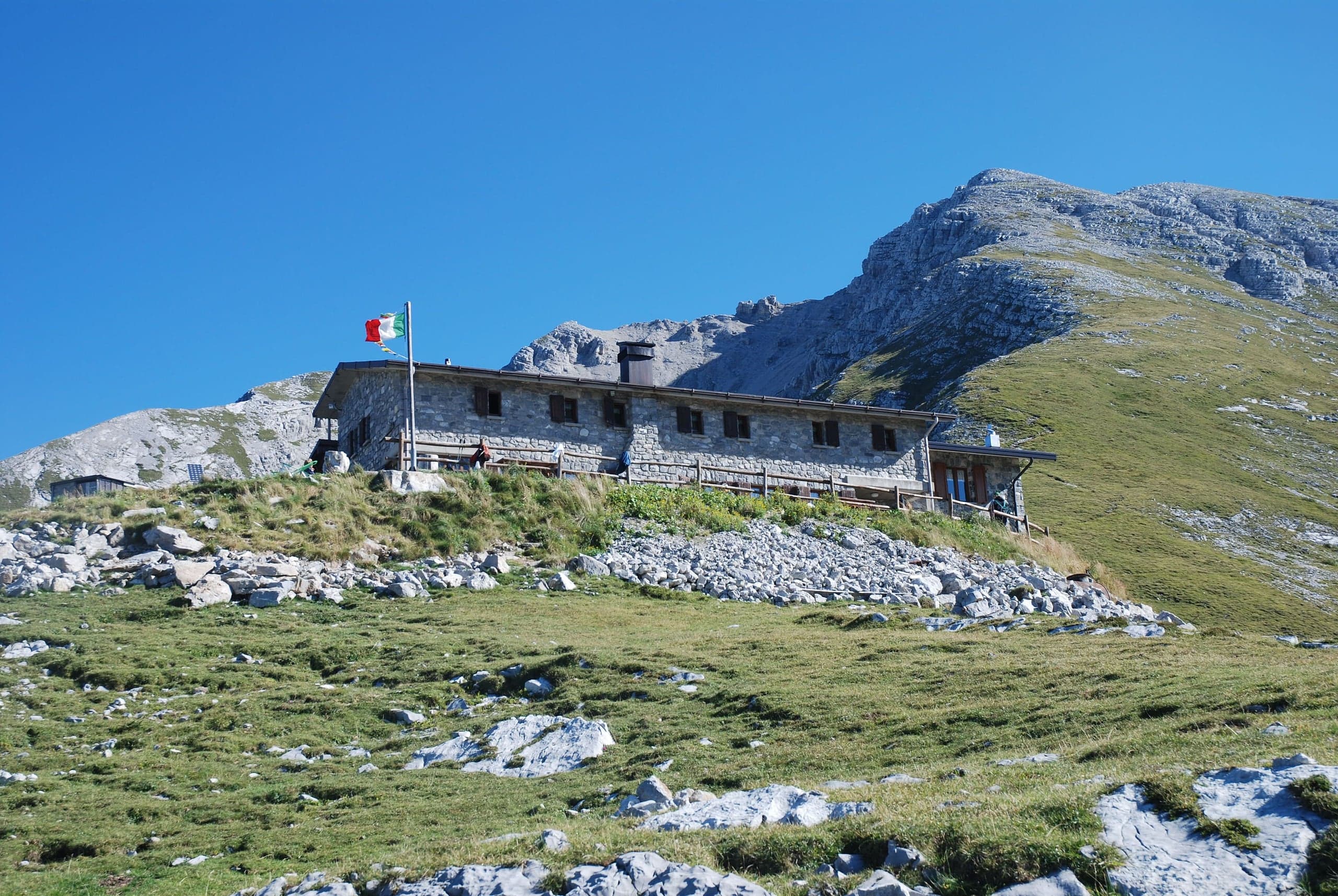
Capanna 2000 hut, 1,960 m below the Pizzo Arera: owned by Oltre il Colle, 25 beds, an hour from the Alpe Arera car park. Opening periods, booking and contacts.